

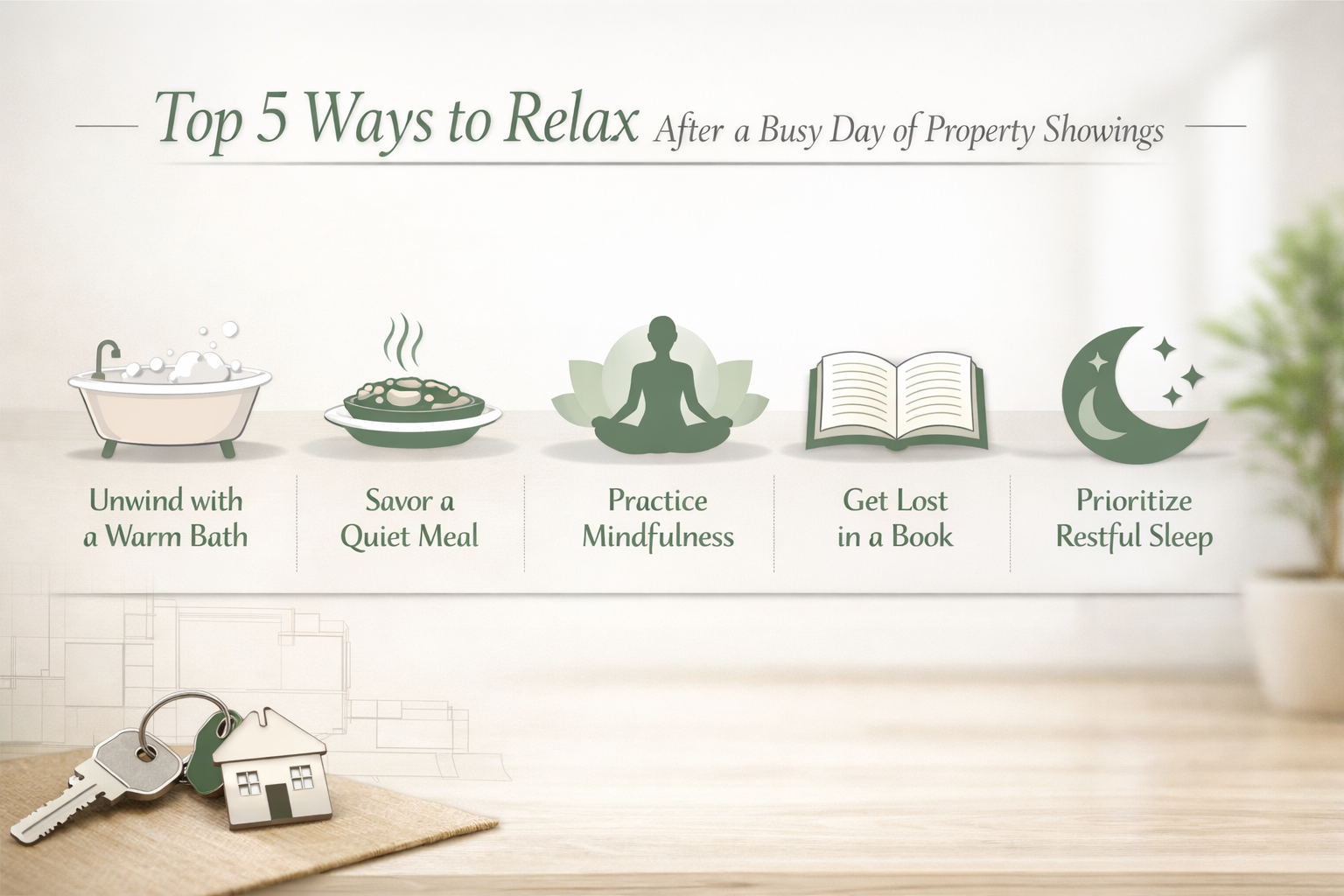
Ever finished a day of property showings feeling like you've run a marathon in dress shoes? You're not alone. Real estate agents face a unique kind of exhaustion that combines physical fatigue, mental stress, and emotional investment all rolled into one demanding package. Between driving from property to property, putting on your best smile for every client, and managing the emotional rollercoaster of sales negotiations, it's no wonder you feel completely drained by the end of the day.
But here's the thing: relaxation isn't just a luxury for real estate professionals—it's absolutely essential. Without proper downtime, you risk burnout, decreased performance, and even health issues. Think of yourself as a smartphone that needs regular recharging. You wouldn't expect your phone to keep running on 2% battery, would you? The same principle applies to you.
That's why finding effective ways to completely disconnect and immerse yourself in a different world is key. Just as some people find a mental escape in a focused, strategic hobby, others unwind by immersing themselves in a brief session of entertainment, like playing the Avia Masters plane game slot machine. The goal is to give your mind a complete break from negotiations and floor plans.
In this article, we'll explore five genuinely effective ways to unwind after those grueling days of back-to-back showings. These aren't just generic "take a break" suggestions—these are practical, proven methods specifically tailored for the unique challenges real estate agents face.
Understanding the Stress of Property Showings
Before we dive into solutions, let's acknowledge what you're really dealing with. Property showings aren't just about opening doors and pointing out granite countertops. You're constantly on your feet, walking through multiple properties, climbing stairs, and standing for hours at a time. Your body takes a beating even if you don't immediately realize it.
Then there's the mental gymnastics. You're answering questions, remembering details about each property, calculating numbers on the fly, and reading your clients' reactions. Your brain is working overtime, processing information, strategizing, and problem-solving continuously.
And let's not forget the emotional component. You're managing clients' dreams and disappointments, dealing with difficult personalities, handling rejections, and maintaining unwavering enthusiasm even when you're feeling the opposite. This emotional labor is exhausting in ways that aren't always visible but are definitely felt.
Way #1 - Treat Yourself to a Soothing Bath or Shower
Benefits of Hydrotherapy
Water has been used for healing and relaxation for thousands of years, and there's solid science behind why it works. When you immerse yourself in warm water, your body temperature rises, your blood vessels dilate, and circulation improves. This helps flush out the lactic acid that's built up in your muscles from all that walking and standing.
Beyond the physical benefits, there's something almost meditative about water. The sensation blocks out external stimuli and creates a cocoon where you can finally let your guard down. After spending hours being "on" for clients, this private sanctuary becomes invaluable.
Adding Essential Oils and Bath Salts
Want to take your bath or shower to the next level? Essential oils and bath salts aren't just trendy wellness items—they genuinely enhance relaxation. Lavender oil reduces anxiety and promotes sleep, eucalyptus helps with mental clarity and muscle relaxation, and chamomile soothes both body and mind.
Epsom salts contain magnesium, which absorbs through your skin and helps relax muscles. After a day of property showings, your feet, legs, and back will thank you. Just add two cups to a warm bath and soak for at least 20 minutes.
Creating the Perfect Bathroom Ambiance
Transform your bathroom into a personal spa. Dim the lights or use candles to create soft lighting. Play gentle background music or nature sounds. Keep your phone in another room—seriously, this is about you, not checking those late-evening client texts.
The goal is to engage your senses in a way that signals to your brain: "Work is over. It's time to recover." This sensory shift helps your nervous system transition from the sympathetic (fight-or-flight) state to the parasympathetic (rest-and-digest) state.
Way #2 - Practice Mindfulness and Meditation
Quick Meditation Techniques for Busy Professionals
I know what you're thinking: "I don't have time to sit and meditate for an hour." Good news—you don't need to. Even five to ten minutes of focused meditation can significantly reduce stress levels and improve your mental clarity.
Try the body scan technique: lie down comfortably and mentally scan your body from toes to head, noticing any tension without judgment. Or practice the 4-7-8 breathing method: breathe in for four counts, hold for seven, and exhale for eight. This activates your body's relaxation response remarkably quickly.
Breathing Exercises to Reduce Stress
Your breath is the most accessible tool you have for managing stress, and you carry it everywhere. When you're stressed, your breathing becomes shallow and rapid. By consciously slowing and deepening your breath, you can literally change your physiological state.
Box breathing is particularly effective: breathe in for four counts, hold for four, exhale for four, and hold empty for four. Repeat this cycle for several minutes. Navy SEALs use this technique in high-stress situations, so it's definitely robust enough to handle your post-showing stress.
Apps and Resources for Guided Meditation
If you're new to meditation or struggle to stay focused, guided meditation apps can be game-changers. Options like Calm, Headspace, and Insight Timer offer sessions specifically designed for relaxation and stress relief. Many have short sessions perfect for busy professionals who need quick but effective tools.
The beauty of these apps is that they remove the guesswork. You don't have to wonder if you're "doing it right"—just press play and follow along. Many offer specialized programs for sleep, anxiety, or physical relaxation, so you can choose what you need most on any given day.
Way #3 - Engage in Light Physical Activity
The Benefits of Gentle Yoga
This might sound counterintuitive—you've been on your feet all day, so why would you want more physical activity? Here's the difference: property showings involve lots of movement but often in tension-filled, repetitive ways. Gentle yoga provides intentional, mindful movement that actually releases tension rather than creating it.
Restorative yoga poses like child's pose, legs-up-the-wall, and supine twists specifically target the areas that get tight during showings—your lower back, hips, and shoulders. These poses encourage deep relaxation and signal to your nervous system that it's safe to let go of the day's stress.
Taking an Evening Walk
If yoga isn't your thing, a simple evening walk can work wonders. The key word here is "simple"—this isn't a power walk or exercise session. This is a gentle stroll where you can let your mind wander and process the day without the pressure of performing or problem-solving.
Walking has a rhythmic, bilateral quality that can be almost meditative. The left-right pattern of walking helps integrate experiences and emotions, making it easier to mentally file away the day and transition into evening mode. Plus, if you can walk somewhere green—a park, tree-lined street, or nature trail—you'll get the added benefits of nature exposure.
Stretching Exercises for Real Estate Agents
Target the specific areas that take the most abuse during showings. Stretch your calves, hamstrings, and hip flexors since they work overtime during all that walking and stair climbing. Don't forget your neck and shoulders, which tense up from stress and carrying bags of listing materials.
Spend just 10 to 15 minutes stretching while watching TV or listening to music. You're not training for a marathon—you're simply giving your body permission to release the physical tension it's been holding all day.
Way #4 - Disconnect from Technology
Setting Boundaries with Work Emails
Real estate doesn't follow a 9-to-5 schedule, and technology makes it way too easy to be perpetually available. But here's a hard truth: constant connectivity prevents genuine recovery. Your brain needs actual downtime to process, consolidate memories, and restore mental resources.
Establish clear boundaries around when you'll check work communications. Maybe it's no emails after 8 PM, or perhaps you check once at dinner and then you're done for the night. Communicate these boundaries to clients upfront: "I'm available until 8 PM for any urgent matters, and I'll respond to all other messages first thing in the morning."
Creating a Tech-Free Zone at Home
Designate certain areas or times as completely tech-free. Your bedroom should definitely be one—the blue light from screens interferes with sleep, and having your phone nearby tempts you to "just quickly check" something, which never stays quick.
Create a charging station in a common area where phones live overnight. Replace scrolling time with activities that genuinely restore you. Your brain craves novelty, which is why social media is so addictive, but that same novelty-seeking tendency can be redirected toward more restorative activities.
Alternative Evening Activities
What did people do before smartphones? They read books, had conversations, pursued hobbies, and—brace yourself—sometimes just sat and thought. These activities might sound boring compared to the dopamine hits of social media, but they're exponentially more restorative for your stressed brain.
Try reading fiction (it builds empathy and provides mental escape), working on a puzzle (engages your mind without the pressure of work), cooking a new recipe (creative and results in something tangible), or playing a musical instrument (even poorly—the point is engagement, not performance).
Way #5 - Enjoy Quality Time with Loved Ones
The Importance of Social Connection
Humans are wired for connection, and quality social interaction is one of the most powerful stress-reduction tools available. After a day of transactional client interactions, spending time with people who care about you (not about what you can sell them) replenishes emotional reserves in ways that solitary activities simply can't match.
Talking through your day with someone who genuinely listens helps you process experiences and put them in perspective. Laughter with friends or family releases endorphins and creates emotional distance from work stress. Even quiet companionship—watching a show together or cooking side-by-side—provides restorative benefits.
Simple Activities to Share with Family
You don't need elaborate plans or expensive outings. Some of the most restorative activities are beautifully simple: sharing a meal without distractions, playing a board game, taking a walk together, or just sitting on the porch talking about anything except real estate.
The key is presence. Put away your phone, resist the urge to check work messages, and actually be there. Your family doesn't need you to be entertaining or impressive—they just need the real you, not the professional persona you've been maintaining all day.
Making the Most of Limited Time
Real estate agents often have unpredictable schedules, which can make quality time challenging. The solution isn't necessarily more time but better quality time. Thirty minutes of genuinely focused, present interaction beats three hours of distracted half-presence.
Be intentional about protecting certain times. Maybe dinner is always family time, or perhaps Sunday mornings are sacred. Having these anchors gives you and your loved ones something reliable to look forward to, even during hectic seasons.
Bonus Tips for Daily Relaxation
Creating a Post-Work Ritual
Rituals help your brain transition between modes. Athletes have pre-game rituals; you need a post-work ritual. This might be changing into comfortable clothes immediately when you get home, making a specific tea, or spending five minutes journaling about your day.
The specific activity matters less than the consistency. Your brain will learn to associate this ritual with the transition from work mode to relaxation mode, making it progressively easier to let go of work stress.
Nutrition and Hydration for Recovery
Don't underestimate the basics. Running from showing to showing, you probably haven't eaten properly or drunk enough water. Dehydration and poor nutrition amplify stress and fatigue.
Keep healthy snacks in your car for between showings. When you get home, prioritize a balanced meal with protein, healthy fats, and vegetables. Avoid the temptation to order takeout every night—cooking can actually be relaxing, and proper nutrition supports both physical and mental recovery.
Conclusion
The demanding nature of property showings takes a real toll on your body, mind, and spirit. But with intentional relaxation practices, you can not only recover from each day but actually thrive in your career long-term. The five strategies we've explored—hydrotherapy, mindfulness practices, gentle physical activity, technology boundaries, and quality time with loved ones—offer diverse approaches to meet different needs and preferences.
Remember, relaxation isn't selfish or optional; it's essential for sustaining high performance. You can't pour from an empty cup, and you can't show up fully for your clients if you're running on fumes. By prioritizing your own recovery, you're actually investing in your professional success.
Start with just one or two of these strategies and build from there. Notice what works best for your unique situation and personality. The goal isn't perfection but progress—small, consistent steps toward better self-care that compound over time into significant improvements in your wellbeing and professional effectiveness.